
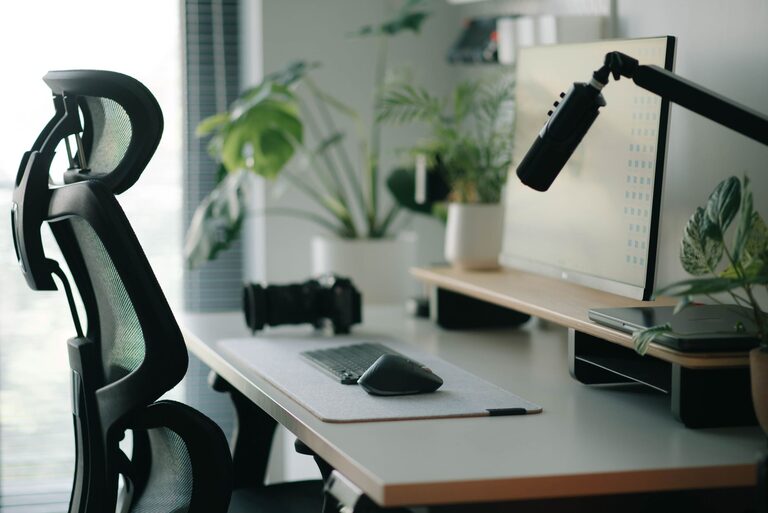
Creating a comfortable and organized desk setup is key to maintaining focus and productivity throughout your workday. Whether you work from home or in an office, the environment around you plays a big role in how efficiently you can complete tasks and stay comfortable. In this post, we’ll share practical tips to help you design a desk setup that supports both focus and comfort.
Why Your Desk Setup Matters
A cluttered or poorly arranged desk can increase distractions and cause physical discomfort. Over time, this may lead to fatigue, reduced productivity, and even health issues like back or wrist pain. On the other hand, a well-thought-out workspace helps you maintain concentration and physical well-being, making it easier to tackle your daily tasks.
Essential Tips for a Focused and Comfortable Desk Setup
1. Choose the Right Desk and Chair
– Desk height: Your desk should allow your elbows to rest at a 90-degree angle when typing or writing. The standard height is usually around 28 to 30 inches, but it depends on your height.
– Ergonomic chair: Invest in a chair that supports your lower back and encourages good posture. Adjustable features like seat height, backrest tilt, and armrests can improve comfort.
2. Position Your Monitor Correctly
– Eye level: The top of your monitor screen should be at or just below your eye level to reduce neck strain.
– Distance: Place your monitor about an arm’s length away (roughly 20 to 30 inches) to avoid eye strain.
– Dual monitors: If you use two screens, position them close together and at the same height for easy viewing.
3. Optimize Lighting
– Natural light: Position your desk near a window if possible to take advantage of natural daylight, which boosts mood and alertness.
– Task lighting: Use a desk lamp to provide focused lighting on your work area without causing glare on your screen.
– Avoid glare: Angle your monitor and lights to minimize reflections and glare that can cause eye fatigue.
4. Organize Your Desk for Efficiency
– Declutter: Keep only essential items on your desk. Store supplies and documents in drawers or organizers to reduce distractions.
– Frequently used items: Place items you use regularly, such as pens, notebooks, or your phone, within easy reach.
– Cable management: Use clips or sleeves to keep cords tidy and prevent tangling.
5. Incorporate Ergonomic Accessories
– Keyboard and mouse: Choose a keyboard and mouse that fit your hand size and position to reduce wrist strain. Consider a wrist rest for added support.
– Monitor riser: If your monitor is too low, use a riser or stand to bring it to the correct height.
– Footrest: If your feet don’t comfortably reach the floor, use a footrest to support good posture.
6. Personalize Your Workspace
– Add plants: Small indoor plants can improve air quality and reduce stress.
– Inspire yourself: Include photos, artwork, or motivational quotes that make you feel positive and focused.
– Comfort items: Use a cushion or a soft throw blanket to add comfort during long work sessions.
7. Maintain Good Posture Habits
– Sit upright: Avoid slouching by keeping your back straight and shoulders relaxed.
– Take breaks: Stand up and stretch every 30 to 60 minutes to reduce muscle tension and improve circulation.
– Adjust your setup as needed: Make small changes if you notice discomfort during the day.
Tips to Boost Focus Beyond Your Desk Setup
Minimize Distractions
– Use noise-canceling headphones or play background music if it helps you concentrate.
– Turn off notifications on your phone or computer during focused work periods.
– Use apps or settings that block distracting websites if needed.
Establish a Routine
– Start your workday by tidying your desk to create a clear mental space.
– Set specific goals for each work session to maintain motivation.
– End your day by organizing your workspace to prepare for the next day.
Conclusion
A well-designed desk setup can greatly enhance your focus and comfort, helping you stay productive and healthy throughout your workday. By choosing ergonomic furniture, optimizing lighting, organizing your space, and practicing good posture, you create an environment where it’s easier to concentrate and feel good. Remember, small adjustments tailored to your preferences can make a big difference.
Try implementing some of these tips today and enjoy a more comfortable and focused workspace!